
As AI adoption in hotels accelerates, guest expectations are moving the opposite way, found hospitality specialist, Mews, in its newly release survey.
For the firm, guests have been clear about they want and that is not in every point of one's stay.
New Mews study finds they are clear where they want to see AI in their experience
October 7, 2026Updated 10/07/20263 min read
In fact, the preference is for a hybrid stay. 89% of guests said they want either a hybrid stay blending AI and human service or AI operating quietly in the background on repetitive tasks. Almost none want an AI-led stay.
59% of guests believe AI should take over repetitive tasks so hoteliers can instead focus on building trust with their guests.
So where does the human element need to remain? According to the hospitality giant, it's at very particular times.
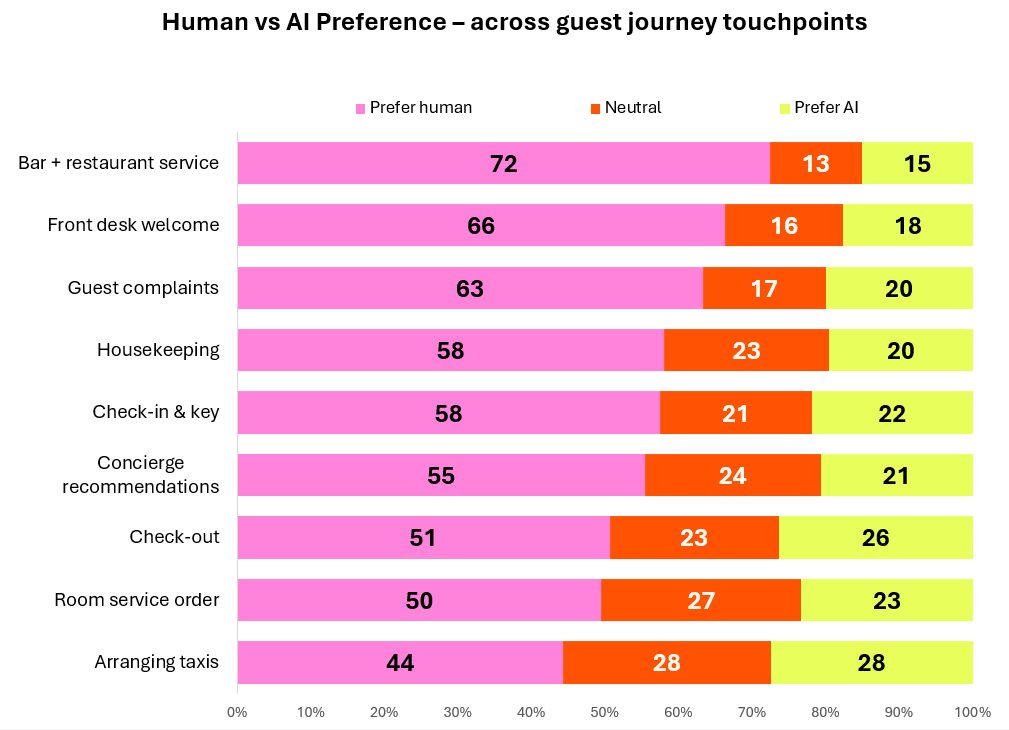
Even for the most automatable task tested – arranging taxis – 44% of guests chose a human over 28% who chose AI.
The gap narrows as tasks get more transactional – room service orders come close to an even split (50% human vs. 23% AI) – then widens sharply wherever judgement, personalisation or trust is involved, in bar & restaurant service (72% prefer a human), front desk welcome (66%), and check-in & key (58%).
We know that the human touch must remain but where in the experience. The data revealed that 75% of guests say good hospitality depends on human staff regardless of the technology behind it, so the firm believes that hotels that unify guest data across every system are "best positioned to use AI well".
But what does this mean for hotels? Well, the data that opportunity isn't in building AI-first experiences.
It's in automating the "mundane", to allow staff more time for the moments that need a person.
Automated check-in and check-out, AI-driven upsells and room personalisation, as well as real-time translation and guest messaging that handle routine questions instantly, plus the behind-the-scenes work (i.e. pricing, housekeeping coordination, reporting) are all included in this.
"Guests are telling us exactly where they want AI and where they don't," said Richard Valtr, founder of Mews.
"The hotels that win this next decade won't be the ones that automate the most. They'll be the ones whose systems are unified enough that AI can actually deliver a new way of operating, and where staff can get back to providing a genuine human experience."
Travellers aren't rejecting AI outright but they are rejecting AI that they can't see or control, the research has ruled.
The hotels that get this right won't be the ones automating the most, but the ones choosing where automation belongs carefully and having people everywhere else.
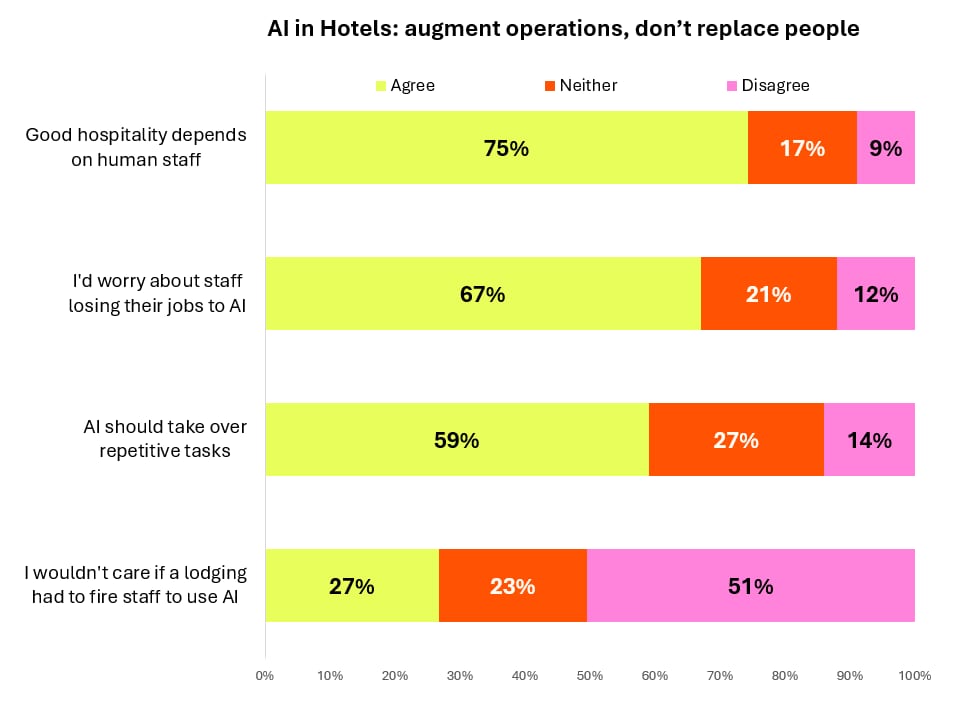
The same goes for jobs, it found. 67% of guests would worry about staff losing their jobs to AI, and 51% disagree that they wouldn't care if a hotel cut staff to adopt it.
This, of course, is good news for the hospitality systems operator which just one of many tech firms that recently made a lot of lay offs, including PayPal, Hubspot, Uber Technologies, Microsoft and more.