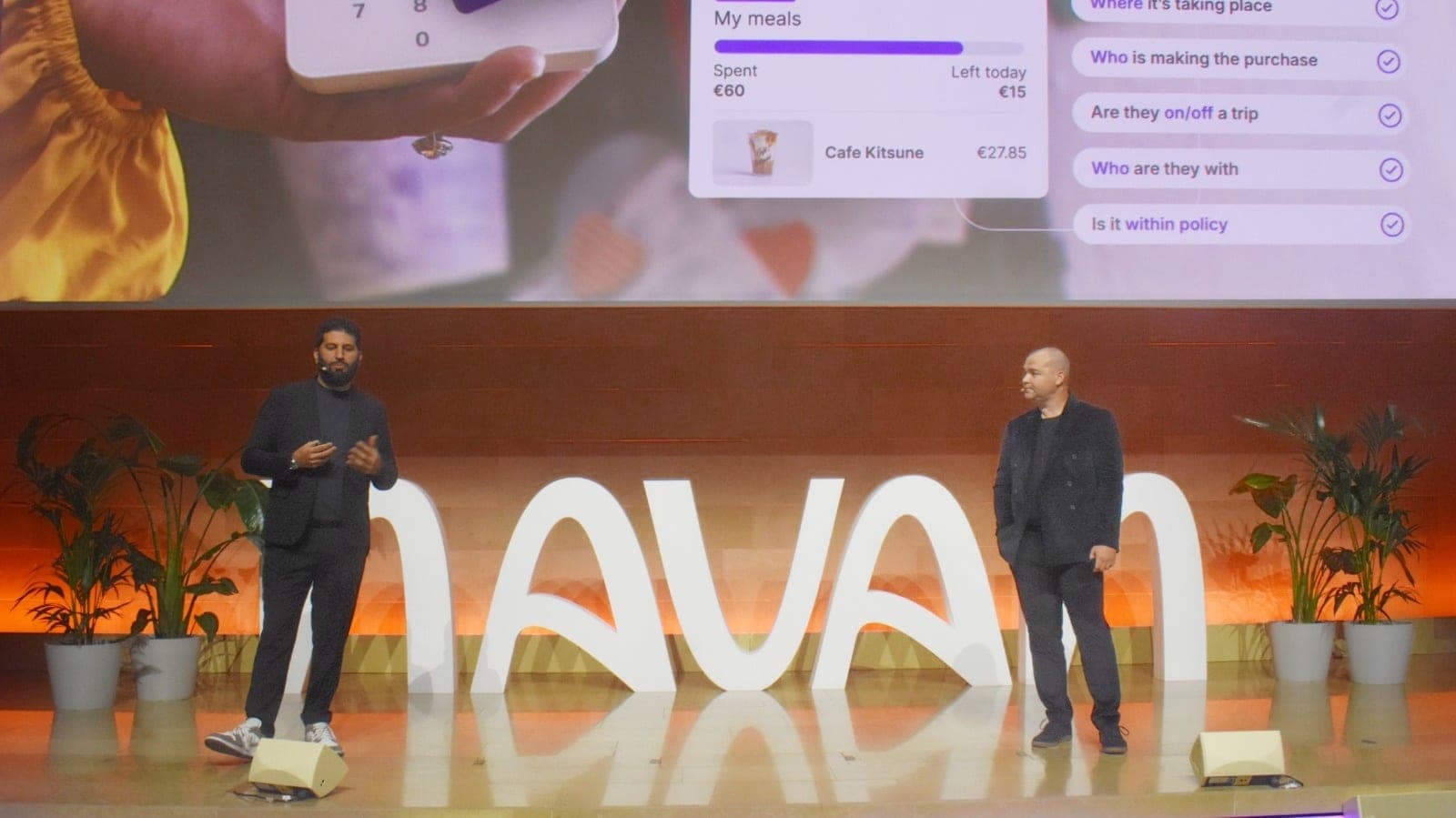
At the first European stop of its Navigate event, Navan, the AI-powered travel and expense platform, unveiled several product updates and restated its ambitions in Europe.
Aurélien Nolf, chief financial officer, had hinted at this feature: employees can now search, book and manage trips without leaving Slack. Administrators can also query company travel and expense programme data in natural language. The US company made the announcement at Navigate’s European edition, held for the first time in Paris.
Navan says the move fits within its “Navan Anywhere” initiative, aimed at simplifying the employee experience by embedding business travel into tools people already use every day. “There are tools like Slack or Google Gemini; people now want everything in one place, practical, fast, and seamless,” Nolf said. “That’s what we want to unlock: the ability to book a trip from anywhere.”
New currencies and guests
The day also saw the preview of a forthcoming feature called Guest Expenses, which will allow external participants, from job candidates to clients and other guests, to submit their spend and track reimbursements directly in Navan. “Employees aren’t the only ones making purchases; there are also contractors, candidates and guests. We are now bringing those external users exactly the same smooth experience,” said Yuval Rafua, chief product officer, during his session at Navigate.
The company also announced it can issue local payment cards in five additional currencies: Australian dollar, Canadian dollar, Danish krone, Swedish krona and Polish zloty, taking the total covered to 15.
Other incremental capabilities, still in beta, were shown to attendees, including the option to capture expenses by filming and narrating receipts. In a matter of seconds, the system identifies amounts and the nature of the spend, and can verify whether purchases comply with company policy.
While Navan’s leaders opened the event with user-research findings to justify immediate and upcoming changes, Michael Riegel, chief customer officer, underlined the company’s near-existential need to keep innovating. “Businesses are constantly evolving,” Riegel noted. “Our customers are growing and expect ever more from our solutions. That is why we keep innovating to improve every step of the employee experience.”