
Is this the time to talk about sustainability? More than ever, according to Amadeus.
The international landscape is marked by geopolitical tensions and energy inflation.
According to Amadeus, the current period of instability does not mark the end of aviation's environmental ambitions.

November 18, 2026·Updated 11/18/2026·4 min4 min read
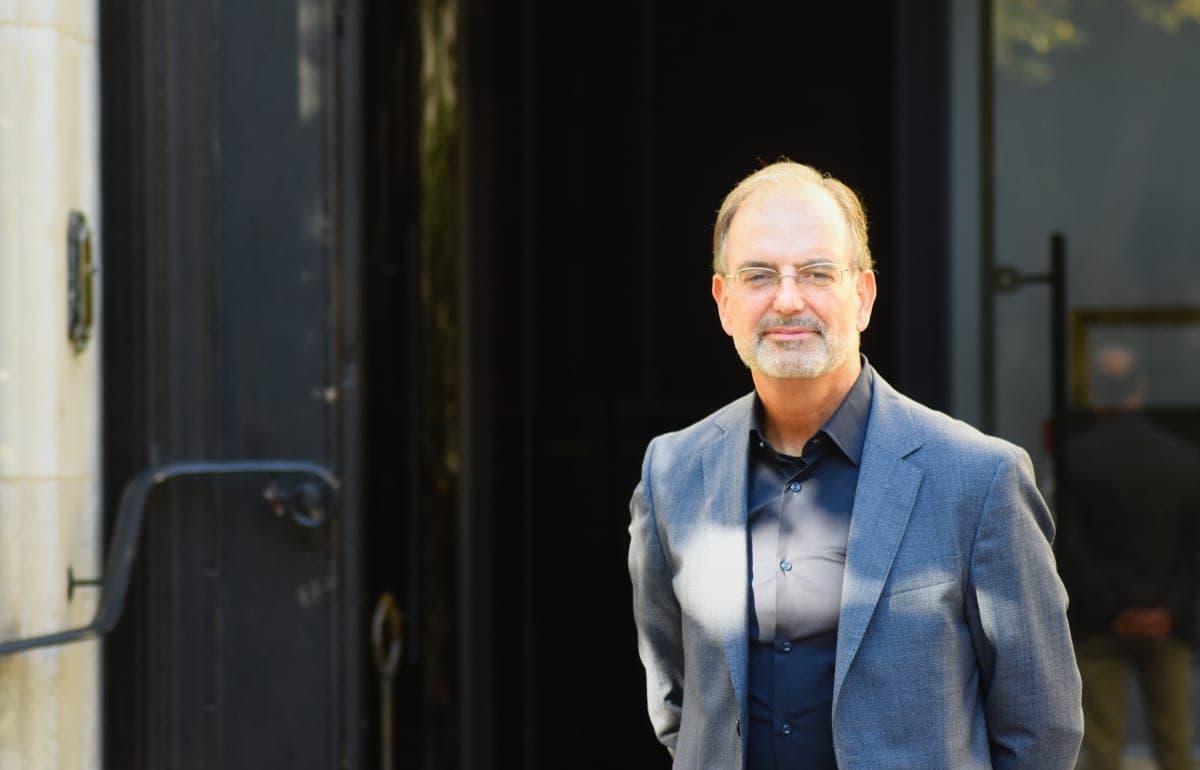
Is this the time to talk about sustainability? More than ever, according to Amadeus.
The international landscape is marked by geopolitical tensions and energy inflation.
For many aviation decision-makers, daily crisis management and market volatility risk consuming attention and resources, relegating the carbon reduction agenda to a secondary priority.
Yet, according to Lucas Bobes, group environmental officer at Amadeus, interviewed at the 2026 A World For Travel forum, this period of instability does not mark the end of aviation's environmental ambitions.
On the contrary, it acts as a powerful wake-up call and a pragmatic accelerator of sector awareness.
While governments and airlines may be tempted to push environmental goals into the background to handle immediate security, logistics and financial emergencies, the climate crisis sets its own timetable. It demands rapid, measurable decarbonisation.
"What is happening now, what we are seeing in geopolitical conflicts and the polarisation of opinions, is a little bit of a wake-up call," said Bobes.
"We have to be very pragmatic about it: there are things we cannot influence, so we are not going to bother too much about that.”
“But what this situation is actually helping us do is to make sure we focus on those things we can influence and those things we can promote, and so it reinforces a little bit our focus on our environmental sustainability strategy."
Responding to geopolitical instability also means saving fuel and therefore reducing the carbon footprint, Bobes notes.
Cutting the amount of jet fuel burned is no longer only about responsibility; it has become an economic issue that is more likely to mobilise companies.
"One of the things we are seeing in Europe is that the mandates for sustainable aviation fuel are coming in: by 2030, airlines will need, I think it's six per cent, of SAF as part of their fuel supply. And this, for the short to medium-term future, is clearly going to bring up additional costs," said the group environmental officer at Amadeus.”
“In this context, it makes even more sense to come up with efficiencies that reduce the amount of fuel that airlines need. This translates directly into reduced costs."
The quest for operational efficiency also relies on concrete technological solutions, such as optimising aircraft weight-and-balance to improve in-flight efficiency.
"Compared with other means of transportation, I would argue that aviation has been quite efficient," said Bobes.
"Take, for example, load factors, which are now at 84–85% across the industry and used to be at 80%, that is in part due to the fact that the cost of fuel is so high that it forces the industry to be more efficient.”
“I think we need to still work more on those elements, because we still have a fifteen per cent of load factor to gain, not to mention airport traffic management and flight operations."
So how should the industry act in a diplomatic climate focused elsewhere? And who should take the lead in harmonising best practice?
For Bobes, the moment highlights the responsibility of global technology companies. These multinationals, he argues, have the independence and legitimacy to bring common standards to life.
"In a situation where we see some divergent positions, global companies that are not governed by only a local jurisdiction have the opportunity to raise some of these points and help the industry come together.”
“That is precisely one of, and I think the most important, pillar of our strategy: working together with the industry."
That convergence responsibility is especially visible in measuring and disclosing the carbon footprint.
Amadeus is working with IATA, ICAO and the Travelyst coalition on a unified methodology, a goal not yet reached but now within sight.
Five to ten years ago, estimates of per-passenger emissions for the same flight could vary considerably depending on the model used; those gaps have narrowed today.
Harmonisation is all the more urgent as measures are being introduced in France, the UK and Switzerland to improve environmental information at the point of booking.
Far from being a parenthesis or a pause in aviation's green transition, today's geopolitical and economic turmoil acts as a wake-up call, Bobes argues, replacing fine words with a hunt for immediate operational efficiency.
"I prefer to see it from the opportunity side, in the sense that sustainability is something that should unite us, as it is by definition a global issue," said Bobes. "
So we need to work together towards sustainability. And, with all the discrepancies that there may be, I think there is a common understanding; a general baseline, that sustainability topics need to be addressed in cooperation."